Avionn Automotive Company History
Part 2 of 4
A four part series tracing Avionn Automotive from its earliest idea to the company it is becoming today.
Listen to this article
Keep listening while you multitask. Background playback is supported on compatible devices.
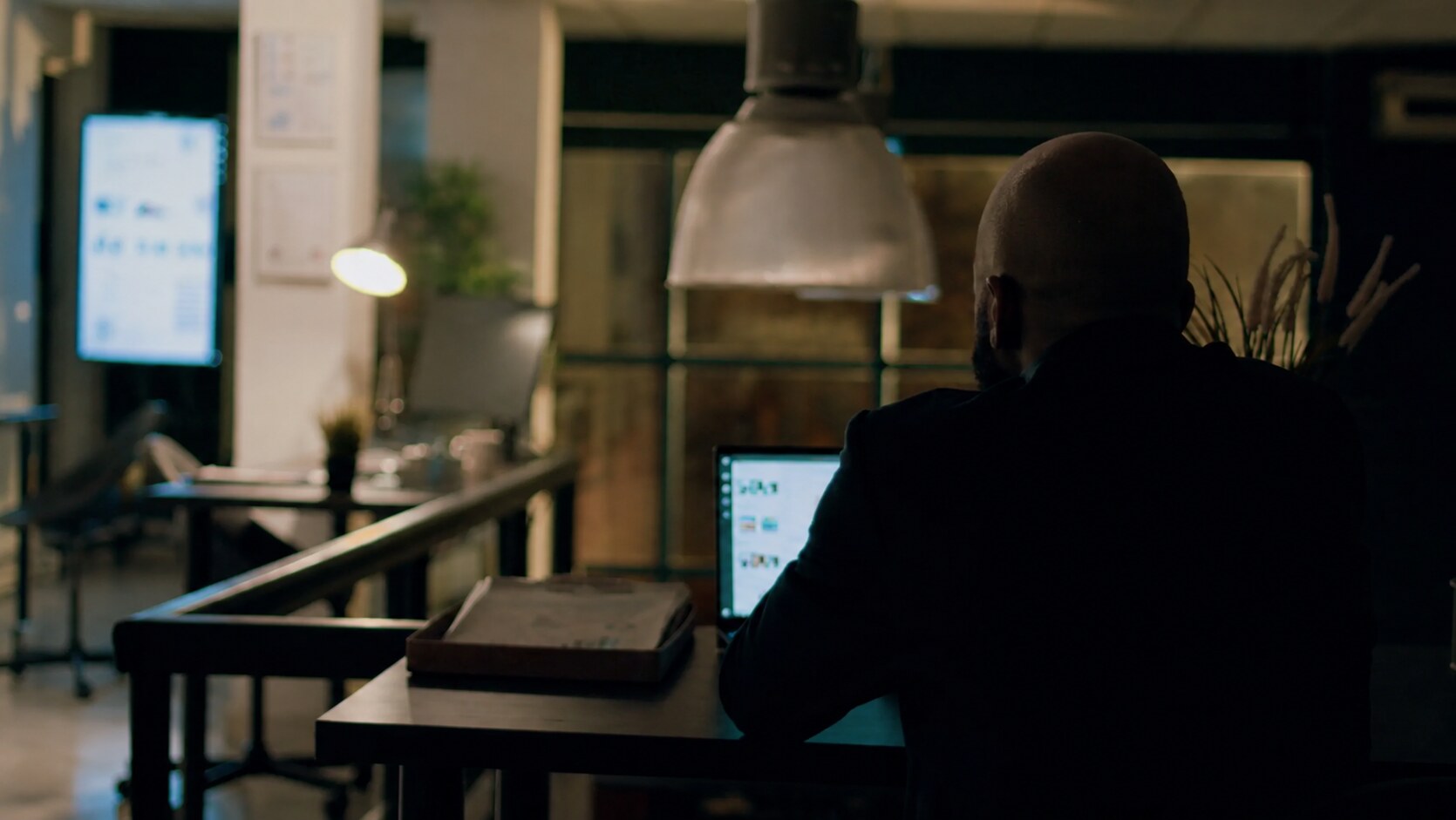
Part Two: Building Without an Audience
There is a version of entrepreneurship people like to celebrate. It is filled with launch announcements, investment rounds, polished offices, rapid growth, and carefully edited stories about success.
But there is another version.
It happens late at night, after work, when the founder is physically exhausted but mentally unable to stop thinking about what the company could become. It happens when the business exists more clearly in the founder’s imagination than it does anywhere outside it.
That was the environment in which the modern Avionn Automotive was built.
For a long time, the vision was larger than the infrastructure supporting it. Russelle could see what the company needed to become, even when the complete path toward building it was not yet clear.
Avionn needed to be independent and feel entirely different from a dealership. It needed to make people feel informed rather than sold. It needed to serve clients locally and eventually across all fifty states.
Most importantly, it needed to help someone find the right vehicle without pretending that every search should end in a purchase.
Sometimes the best outcome would be to wait. Sometimes the answer would be to repair the vehicle a client already owned, reconsider the budget, or refinance. Sometimes the greatest value Avionn could provide would be the courage to say:
Do not buy this vehicle.
That philosophy sounds simple when summarized in a few sentences. Building an automotive consulting firm around it was anything but simple.
Building a Model Around Judgment
Nearly every conventional pressure in automotive retail points toward conversion. Avionn Automotive was attempting to create a model in which judgment mattered more than closing.
That required reconsidering nearly everything.
How should clients enter the process? What information should they provide? How should their needs be evaluated? How should vehicles be selected and recommendations explained? How should advisors be compensated? How could the company grow without allowing sales pressure to corrupt its original purpose?
Most critically, how could Avionn remain client first once money entered the equation?
Those questions were not answered in one meeting. They were answered through countless conversations, revisions, second thoughts, new ideas, discarded ideas, and nights when the only visible progress was a clearer understanding of what still needed to be built.
Russelle was not sitting inside a heavily funded startup surrounded by engineers, designers, attorneys, strategists, and department heads. He was still working and carrying the responsibilities of everyday life.
He brought his energy to someone else’s business during the day. Then he returned home and spent what remained of that energy building his own.
There were no guarantees that the work would lead anywhere. There was no audience waiting for the next update and no viral attention proving that people cared.
There was only the belief that if the company were built correctly, and if every decision reflected its values, the market would eventually recognize what Avionn Automotive represented.
An Unconventional Collaboration
During those nights, Russelle found an unconventional collaborator in artificial intelligence.
He called her Mia.
Their conversations became more than requests for copy or technical assistance. They developed into ongoing strategy sessions.
Russelle would bring an idea. Mia would challenge it, expand it, organize it, or identify what might still be missing. One question would lead to another, often revealing that what appeared to be a simple operational decision was connected to something much larger.
A website page became a discussion about positioning. A customer form became a discussion about trust. A compensation plan became a discussion about ethics. A hiring portal became a discussion about culture. A notification became a discussion about accountability.
Even the company’s tagline became more than marketing language. It became a standard against which every major decision could be measured.
Through that process, Russelle and Mia translated ideas into language, language into systems, and systems into an automotive consulting firm increasingly capable of operating at scale.
Technology, however, did not remove the emotional burden of being the founder. It did not make uncertainty disappear, replace judgment, or assume responsibility for the outcome.
Mia could help illuminate the road, but Russelle still had to choose the direction. He had to decide which ideas represented Avionn and which did not. He had to determine where to invest limited time, energy, and money.
He also had to carry the possibility that after all the building, the customers might not come.
When the Strategic Became Personal
Eventually, one question became increasingly difficult to ignore:
Where are the customers?
The company was improving. The website was improving. The message was becoming clearer, and the brand was becoming more credible.
The problem Avionn addressed had not disappeared. Millions of people still found vehicle buying stressful, confusing, and adversarial. So why had widespread traction not arrived?
For a founder, that question is rarely only strategic. It becomes personal.
When a company is built from your judgment, a lack of response from the market can begin to feel like a judgment of you. You wonder whether the idea is as valuable as you believe. You wonder whether you have explained it correctly or overlooked something obvious.
You question whether you started too early, moved too slowly, or failed to make people see the value of what you created.
But Russelle continued.
He continued because the absence of immediate traction did not make the underlying problem less real. He continued because the company was not built around a trend. He continued because clients still deserved someone on their side.
Slowly, the question began to change.
Instead of asking only, “Where are the customers?” a more foundational question emerged:
If the customers arrived tomorrow, could Avionn truly handle them?
Attention Without Infrastructure
That question changed the direction of the company.
Attention without infrastructure is not growth. It is exposure.
Attracting customers before Avionn could consistently receive, serve, communicate with, and charge them would not have created sustainable momentum. It could have created chaos.
Russelle realized that before Avionn Automotive could responsibly invite more customers into its process, the company had to become fully capable of keeping its promise to every client who arrived.
The next chapter would not be glamorous.
It would be construction.
Written by Avionn Insights
Research, perspective, and automotive guidance from Avionn Automotive.